The state of the art (2026/2027)

The state of the art, quite literally.

Because today the art, and the craft, are in the hands of the AI makers.

They experiment every day, release something new every month, and put at everyone's service, and more and more at professionals' service, tools that did not exist until yesterday.

It is a mutual interest.

They need the people who actually work with numbers, to understand what is really needed.
We need them, to work better.

And that is where business finance is changing, among other functions.

From wrong sums to real numbers

At first it was a generative language model that struggled to add up a long list of numbers correctly, and still handled data clumsily.

Today it is an AI that can do a lot of the math and THINK WITH YOU.

It reads large amounts of data in all kinds of forms, no longer just spreadsheets and common documents… but it also connects to the tools we work with.

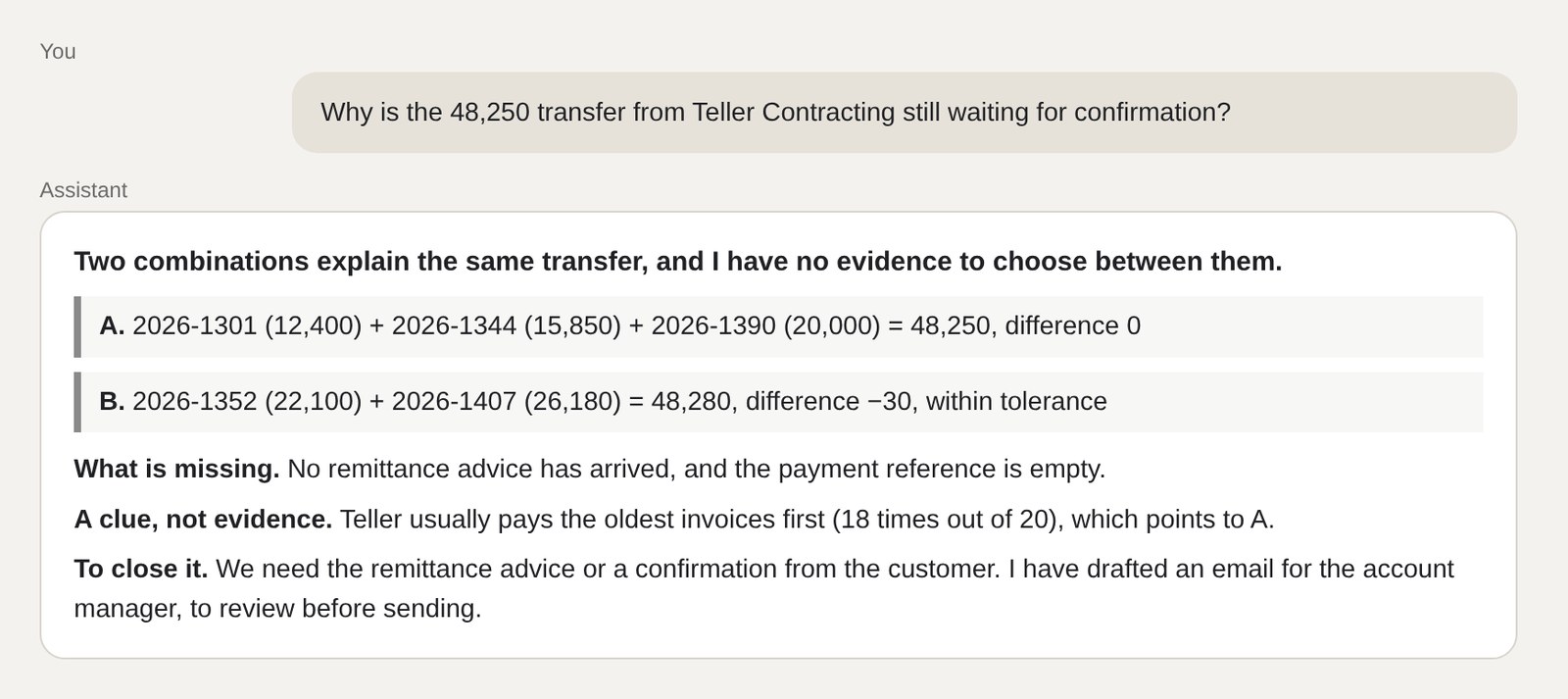
It does the calculations in code and, what's more, can GUESS WHAT THE NEXT STEPS ARE, correctly (most of the time).

In just a few years, AI went from a curiosity to a colleague.

What's still missing in most companies is not the tool, but a way to use it:

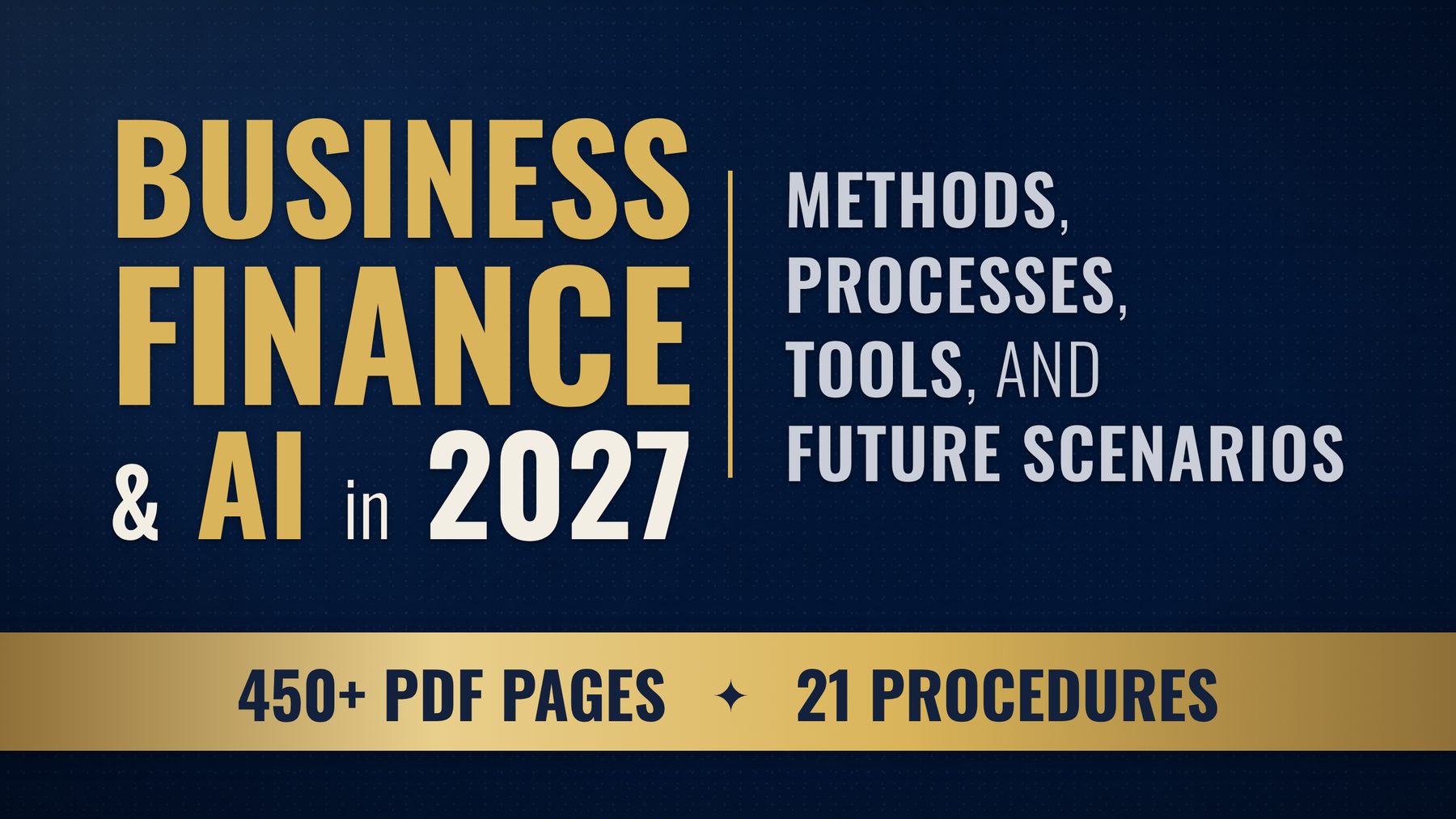
That is what this book is about.

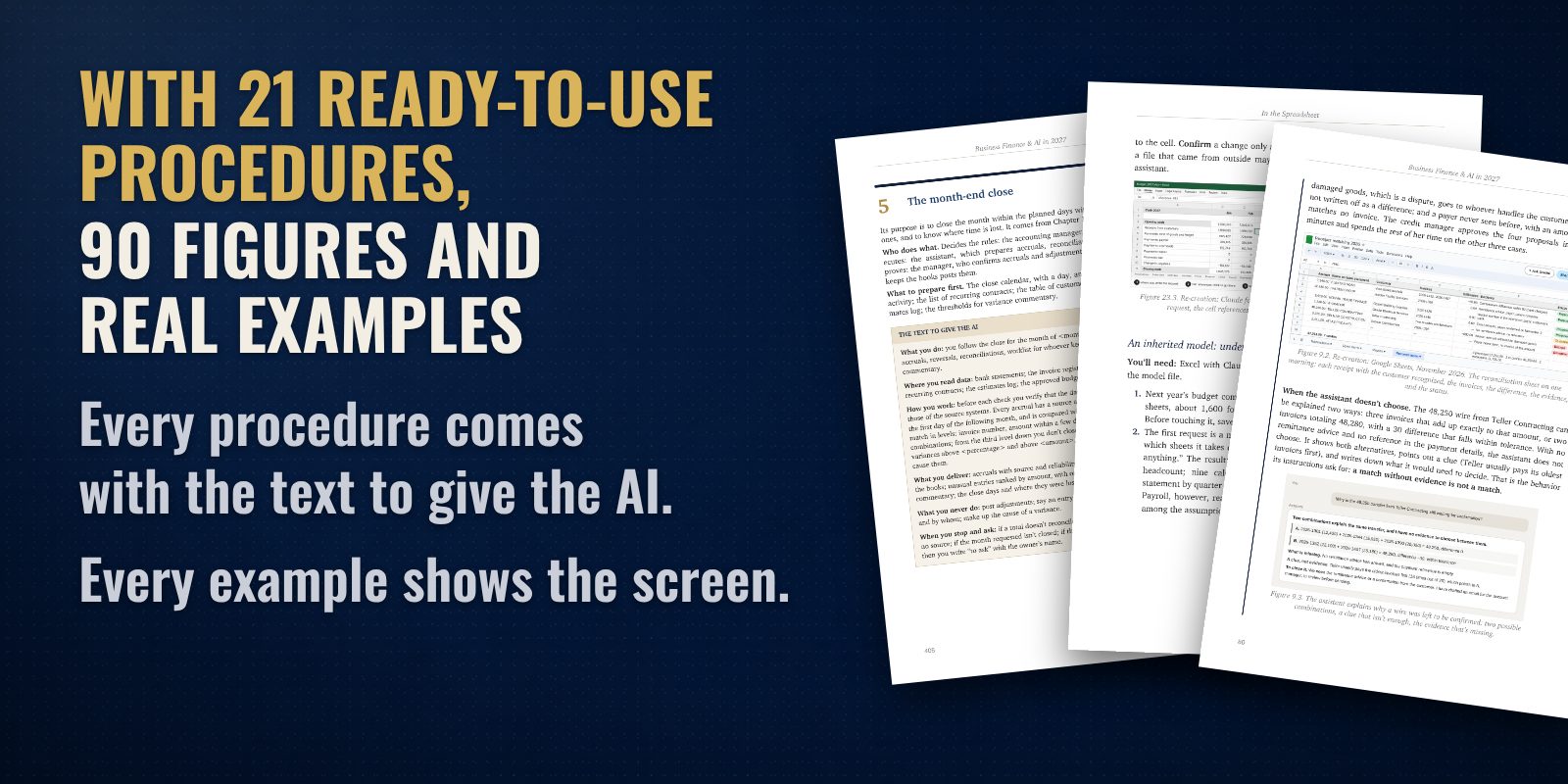
21 ready-to-use procedures

What you'll be able to do

Claude for Excel
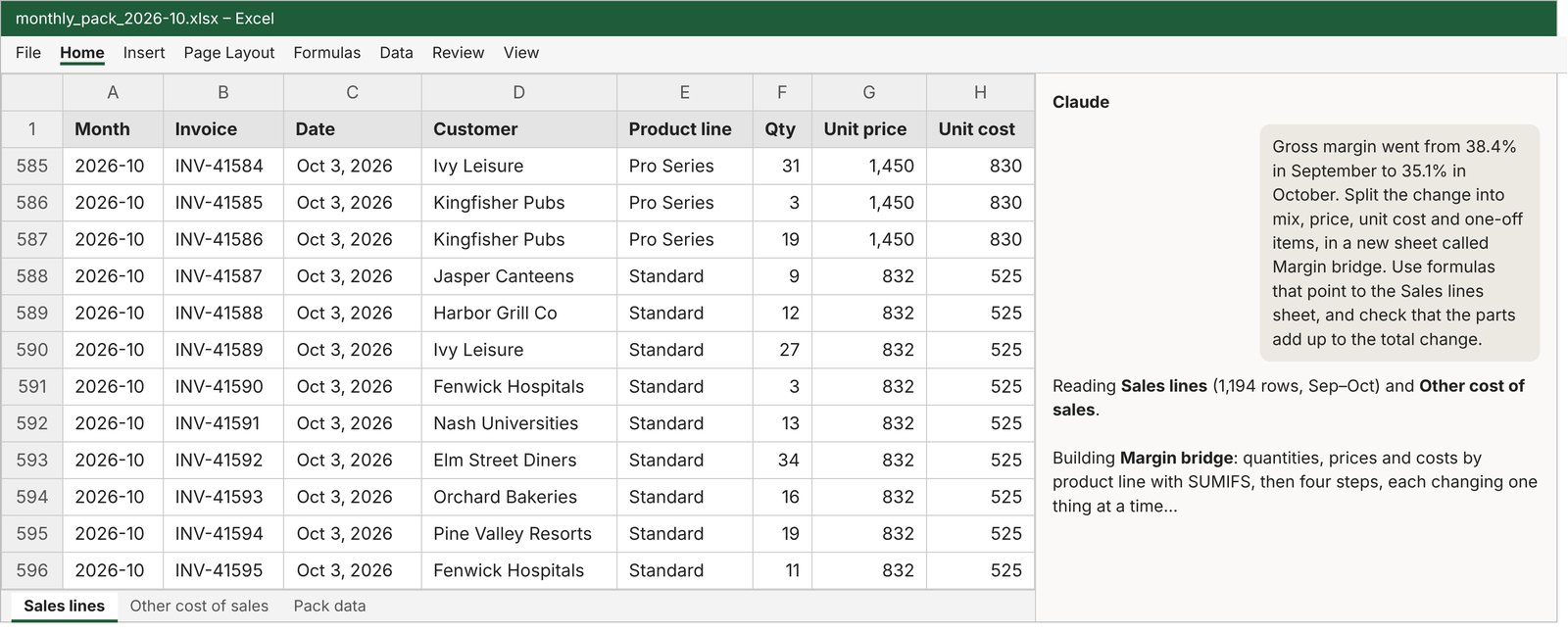
In the spreadsheet: Claude for Excel reads 1,194 sales rows and builds the margin bridge with formulas you can check. Chapter 27
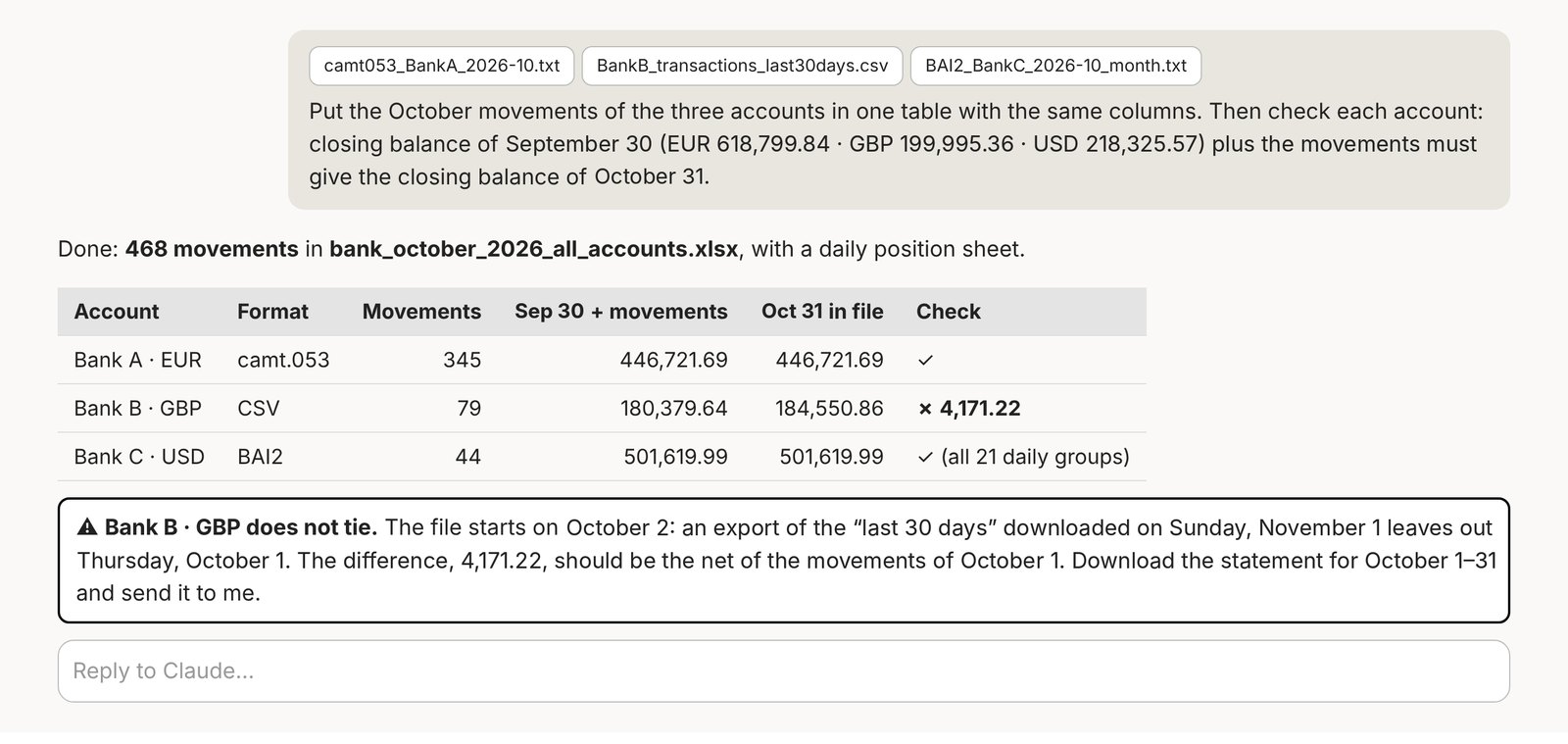
Bank files checked by Claude
At the bank: three accounts, three file formats, one table. One account doesn't tie, and the assistant explains why. Chapter 26
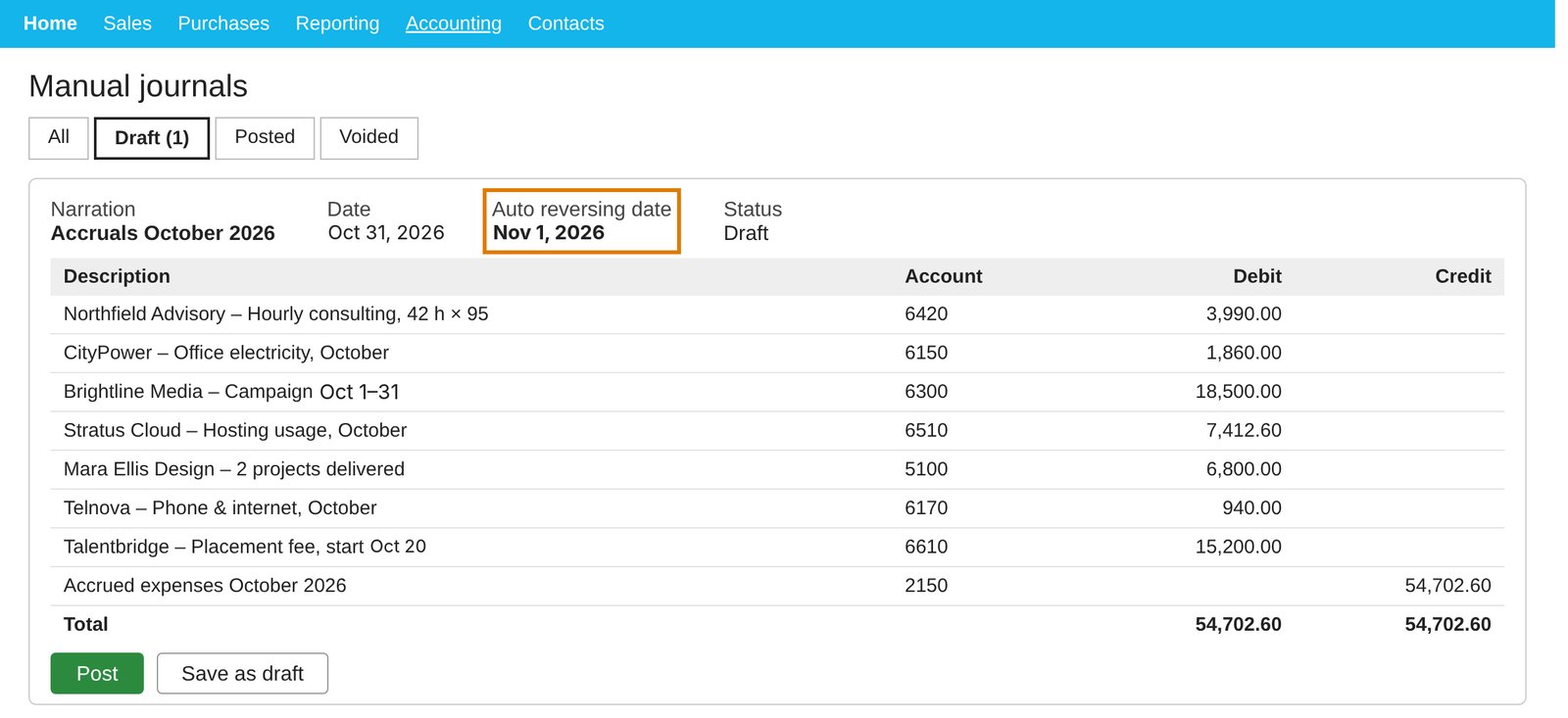
Journal in the accounting system
In the accounting system: the month's accruals arrive as a draft journal. A person reviews it and posts it. Chapter 24

What's inside

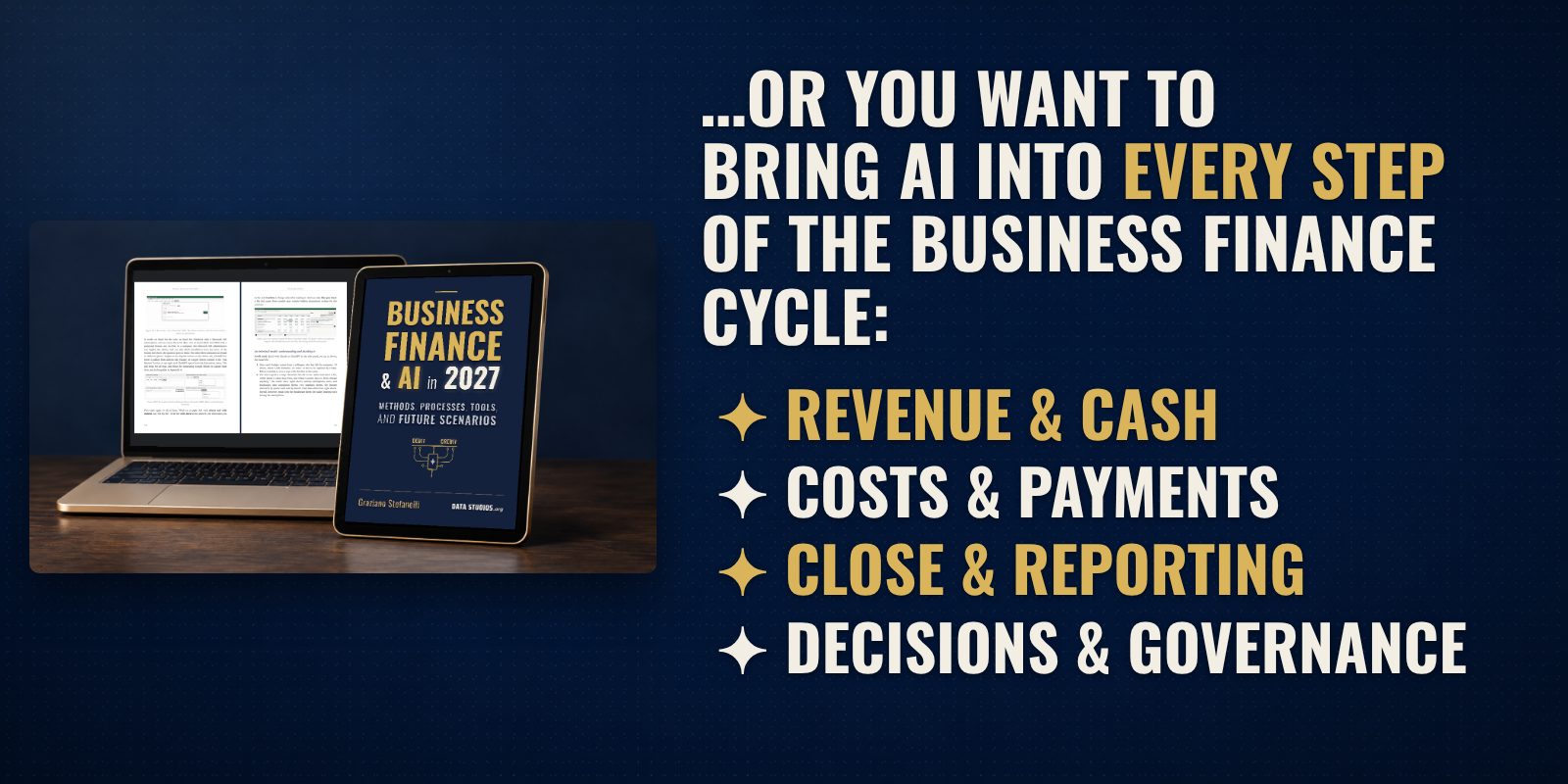
Six parts and four appendices, from the big picture to the daily routine: what has really changed, a method that works with or without AI, every core finance process, the differences between industries, the tools you already use, and the people and rules that keep it all under control.

Part 1Part 2 Part 3Part 4 Part 5Part 6 Appendices

Who it's for

What this book is not: a software manual, or a book of promises. It's a method for running finance well, and a guide to bringing AI into it.

About the author

I spent seven years as a fractional controller and finance manager, working across several startups.

Today I'm a proud member of a great team in my day job, and a curious writer at Data Studios.

I've spent several years doing my own research and testing, and helping make AI accessible to everyone through Data Studios.

I wrote this book because the method I needed didn't exist yet.

— Graziano Stefanelli

Updates

Tools change month by month; the method doesn't. To stay updated, follow datastudios.org.

Frequently asked questions

What format is it?PDF, full color, 450+ pages, with bookmarks for every chapter and a clickable table of contents. Readable on computer, tablet and phone; you can also send it to your Kindle. Is there a print edition?Not yet. For now the book is available as an ebook. Do I need a paid AI subscription?Not to read it. To use the procedures, the assistants most finance teams already have are enough. Do I need to know how to code?No. When a calculation is needed, the assistant writes and runs the small program itself. What you need is to know the process and how to check the result. Is it tied to one country's rules?No. The book is international: tax and regulatory references are generalized across countries. Can I buy copies for my team?Yes. Write to us via the chat at datastudios.org. What if it's not for me?Reply to your receipt email within 30 days of purchase for a full refund.
Data Studios Organization · Italy · www.datastudios.org
Buy the ebook · $29